Past Event Recaps
2026 Annual Conference
Click the thumbnails below to view the presentations from the conference sessions.
PFAS in Drinking Water:
Learn more about PFAS including the extent of the issue, how it is impacting drinking water, and how Maine and federal regulations differ. Also learn about treatment methods to effectively remove substances from water and wastewater. Presenters: ; Courtnay Hanley and Jasmine Bouchard, Maine Drinking Water Program.
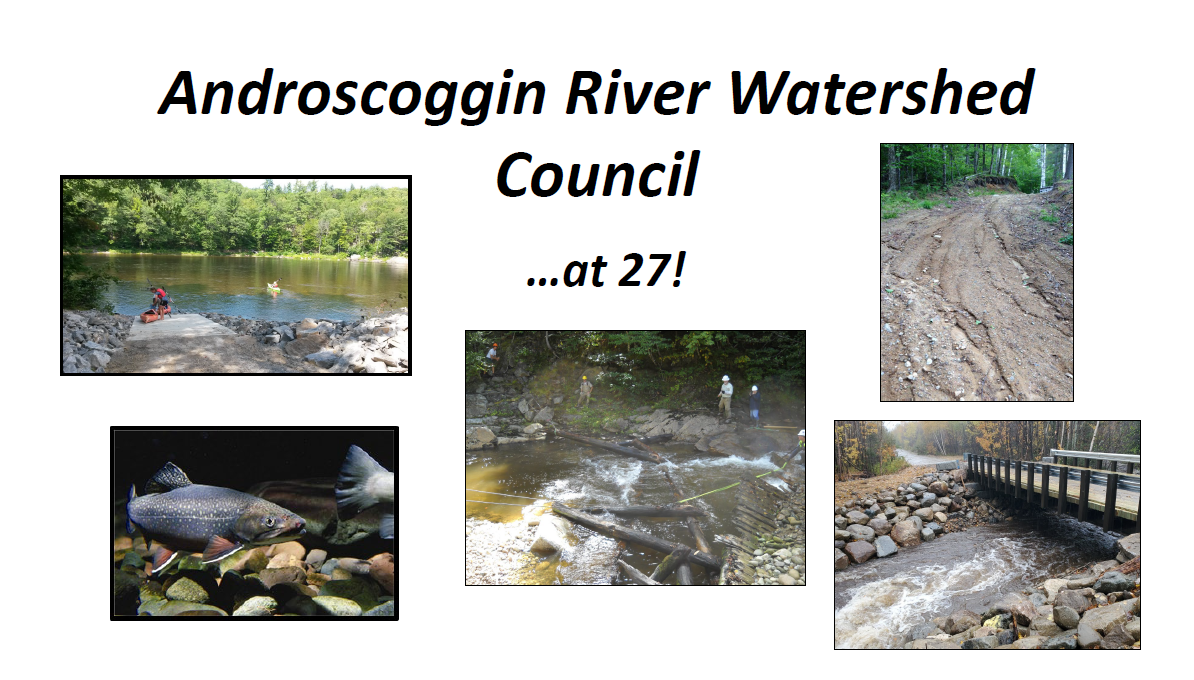
A Recap of 27 Years of the ARWC
An overview of the Androscoggin River Watershed Council’s stewardship efforts, including public education, paddling programs, water quality monitoring, habitat restoration, and community-based stream and lake protection projects over the last 27 years. Presenters: Jeff Stern, Environmental Director, ARWC
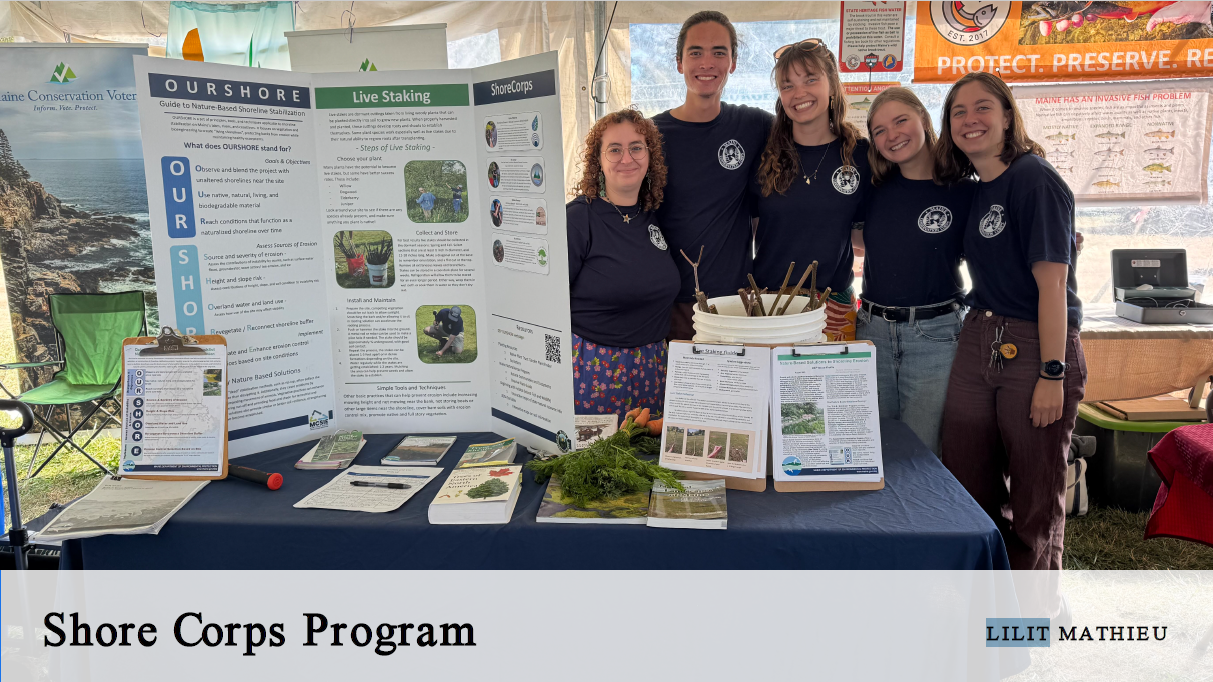
Lake Auburn Shore Corps Program
An overview of the Shore Corps Program and its work using nature-based shoreline stabilization techniques, including live staking, native plantings, and community-led erosion control projects in the Lake Auburn watershed. Presenters: Lilit Mathieu Lake Auburn Shore Corps Steward.
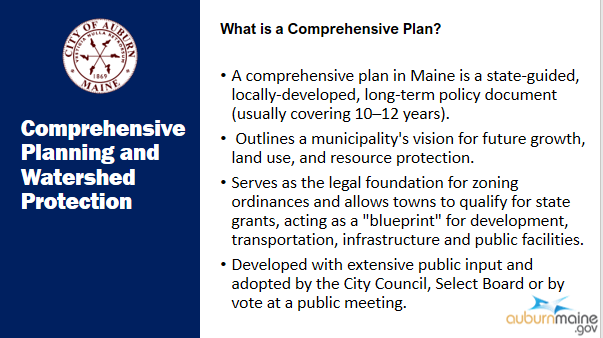
Comprehensive Planning & Watershed Protection
The comprehensive planning and watershed protection efforts for Lake Auburn, focusing on balancing drinking water protection, land use planning, development pressures, zoning, and long-term watershed management across multiple communities. Presenters: Eric Cousens, Executive Director of Public Services, Auburn, ME;
Water Resources in the Comprehensive Plan
An overview of Maine’s requirements for addressing water resources in municipal comprehensive plans, including drinking-water protection, pollution prevention, mapping, regional coordination, and strategies for protecting lakes, rivers, streams, and aquifers. Presenters: Androscoggin Valley Council of Governments (AVCOG).
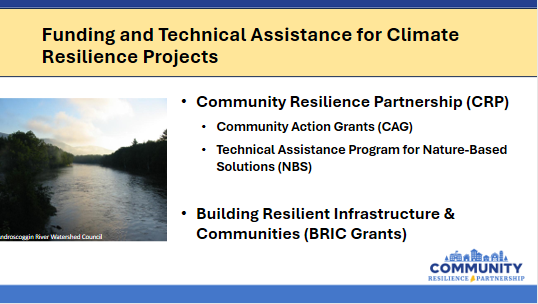
Funding and Technical Assistance for Climate Resilience Projects
An overview of funding and technical-assistance programs available for municipal climate-resilience projects, including Community Action Grants, nature-based and hybrid infrastructure designs, and federal hazard-mitigation funding. Presenters: Catherine Mardosa, (AVCOG)
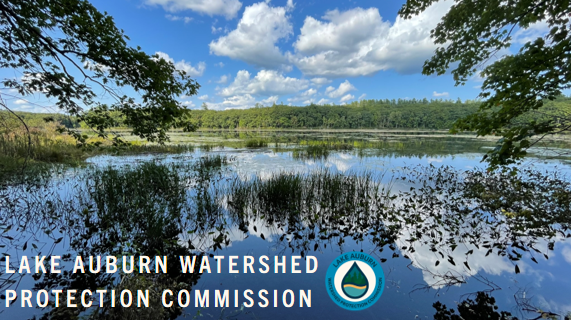
Lake Auburn Watershed Protection Commission
An overview of the Lake Auburn Watershed Protection Commission, its authority, land-conservation efforts, and work protecting the shared drinking-water supply for Auburn and Lewiston. The presentation also covers watershed regulations, intermunicipal cooperation, and the history of Lake Auburn protection. Presenters: Lake Auburn Watershed Protection Commission.
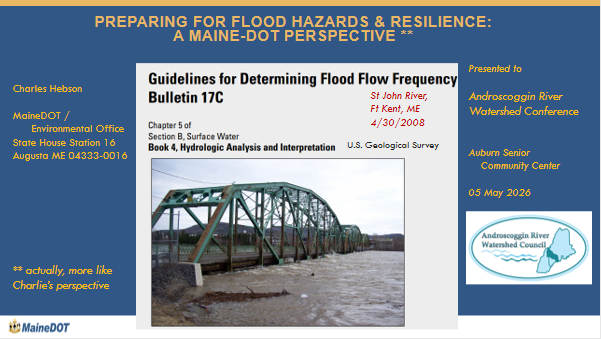
Preparing for Flood Hazards & Resilience: Maine DOT Perspective
An overview of flood probability, recurrence intervals, design flows, climate uncertainty, and infrastructure standards used to reduce flood risks and improve the resilience of transportation systems. Presenter: Charles Hebson, MaineDOT Environmental Office.
Sabattus River Workshop
Hosted November 13th 2025: The Androscoggin River Watershed Council and Androscoggin Valley Soil & Water Conservation District hosted an evening Zoom Workshop to explore what's happening on the Sabattus and Little Androscoggin Rivers. After being cut off for more than 100 years, alewives and other sea-run (anadromous) fish will be able to swim from the ocean to Sabattus Pond once again because of recent dam removals and other restoration efforts on the Sabattus River. Efforts to address erosion and other problems in the Sabattus Pond watershed are also in process. Dr. Theo Willis from the Maine Department of Marine Resources discussed the past, present, and future of the Sabattus River project and why it's important to Sabattus Pond, the Androscoggin River, and the entire Maine landscape. Fish passage in the Little Androscoggin River was also discussed, highlighting potential benefits for the entire Lower Androscoggin River Watershed.
The Maine Department of Marine Resources, NOAA and others have been working to improve fish passage to tributary streams below Lewiston Falls. Several unused and deteriorating dams have been removed, old industrial waste has been cleaned up, and further work is progressing to provide passage of sea run fish, especially alewives, into Sabattus Pond. In addition, the Androscoggin Valley Soil and Water Conservation District is working with the Sabattus Pond Association to address erosion and nutrient runoff issues in the pond’s watershed.
On the Little Androscoggin River, the City of Auburn, with assistance from NOAA, is removing a large, breached hydropower dam. Improved fish passage is planned for the two downstream Barker Mill dams. The goal is to eventually have sea run fish passage into the lakes and streams tributary to the Little Androscoggin River.
2025 Annual Watershed Conference
Held on May 13 2025 at the Auburn Senior Community Center, the conference highlighted some concerns with the impacts of climate change on our transportation infrastructure and out natural resources.
Dana Osgood, NewsCenter Maine Meteorologist discussed the difference between weather and climate, and pointed out, just because we may have a cold day or even a cold month the overall trend has been increasing temperatures around the nation. Molly Kelly-Boyd provided an overview of the updated Maine’s plan, Maine Won’t Wait, to address the impacts of climate change with emphasis on natural resources. Catherine Mardosa from AVCOG provided information on the statewide resiliency effort to assist towns adapt to increased rainfall and flooding, and Allyson Hill from Oxford County Emergency Management Agency discussed extensive flooding in Oxford County and the programs that were available to address infrastructure needs until recent changes at the federal level.
Sarah Haggerty from Maine Audubon demonstrated a hands-on Stream Table that showed how excessive stream flows can lead to erosion and damage to infrastructure and presented how stream crossings designed according to the Stream Smart principles have been resilient.
Other highlights included a presentation on the economic and ecological importance of brook trout and a presentation by Mark Tyrell, who guides on the Androscoggin River in both Maine and New Hampshire, on the excellent trout and bass fisheries on the river and its tributaries. Theo Willis from DMR discussed the amazing progress on dam removal and fish passage that has been made on the Sabattus River.